At the 3rd symposium on ‘Sustainable Building and Renovation’ at HTWK Leipzig, experts from the fields of research, planning, the skilled trades and the construction industry exchanged views

Building materials based on renewable or naturally occurring raw materials, the legal framework and social issues surrounding the construction of the future were the focus of the symposium ‘Sustainable Construction and Renovation’ held on 17 September 2026 at HTWK Leipzig. This marked the third time that experts from the fields of research, planning, the skilled trades, business and public administration had come together for this event. The event was jointly organised by Naturbau Campus in Oschatz, HTWK Leipzig and the Leipzig Chamber of Skilled Trades.
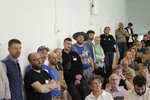
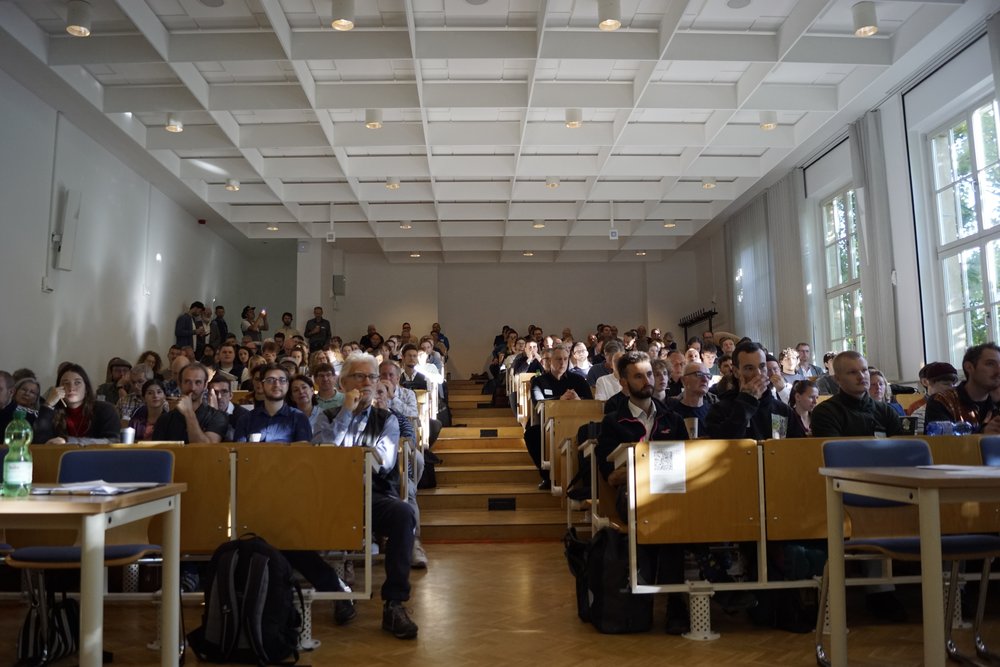
The response demonstrated the great interest in such an exchange: the lecture theatre in the Trefftz Building at HTWK Leipzig was filled to capacity. The participants came mainly from Saxony, but also from Saxony-Anhalt and Thuringia, as well as from other parts of Germany, and took part in specialist presentations, live demonstrations, panel discussions and discussion forums.
From clay and timber to planning permission and fire safety

The programme highlighted just how diverse the challenges and aspects relating to sustainability in construction are. In addition to new legal requirements, certifications and issues relating to building services, topics covered included timber-clay hybrid construction, clay construction, insulation materials made from renewable raw materials, green facades and socially sustainable forms of housing.
A key focus was on the question of under what conditions building materials based on renewable or naturally occurring raw materials can actually be used – for example, with regard to planning permission, fire safety and technical requirements. In a moderated expert discussion, participants debated these issues at eight themed round tables, covering topics such as climate-neutral and climate-positive construction, historical building materials such as clay and lime, green facades and building materials for interior fit-outs.
Practical knowledge meets research

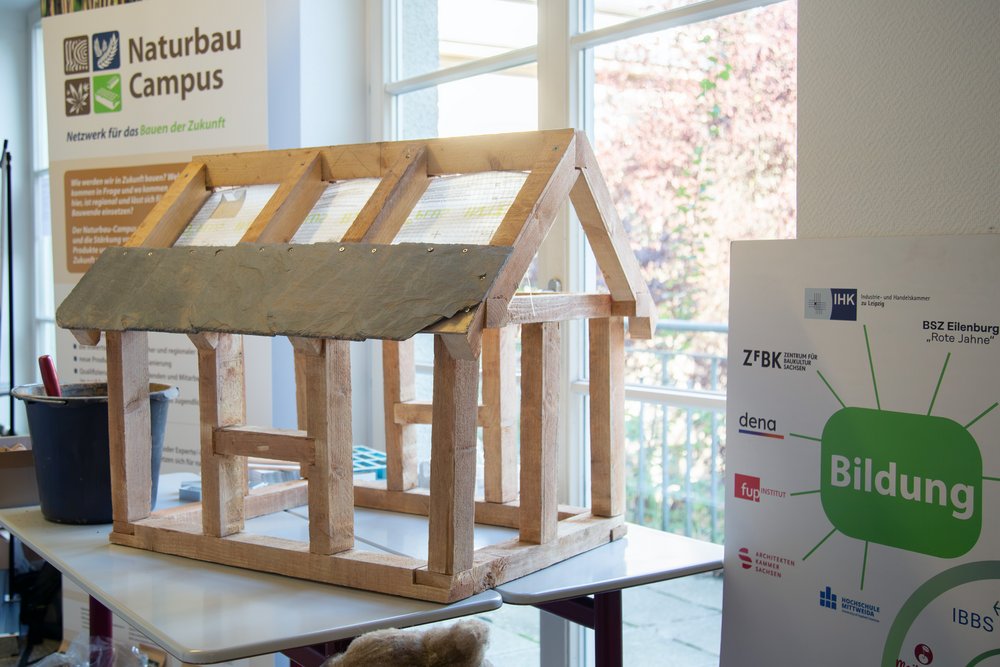
The aim of the symposium was particularly clearly illustrated during a practical demonstration by master bricklayer David Pfennig. Three methods of constructing masonry using clay were demonstrated: a wood-clay hybrid construction method, demountable masonry using clay as a thin-bed mortar, and a method using large-format clay bricks, which, in accordance with the new DIN standard, can also be used to construct load-bearing structures with multiple storeys. In addition, fire tests were carried out using various building materials.
For HTWK Leipzig, it is precisely this combination of scientific knowledge and practical experience that forms a key part of the collaboration: “What is particularly valuable from the perspective of HTWK Leipzig – even though we conduct application-oriented research anyway – is the cooperation with tradespeople and specialist firms on implementation and the practical work with building materials within the framework of specific regional construction projects. This provides valuable insights for all involved, not only to discuss and define sustainability in scientific and theoretical terms, but above all to see how it can be put into practice and to identify ways in which building with materials based on renewable or naturally occurring raw materials can be brought into widespread use,” said co-organiser Björn Höhlig, HTWK Professor of Sustainable Construction and Building Renovation.
Among other things, Höhlig’s research focuses on utilising regional clay deposits for new building materials. The current ‘RegioLehm’ research project aims to catalogue regional resources, investigate their potential for new applications and thereby lay the foundations for local value creation and material cycles.
Direct exchange is also becoming increasingly important from the perspective of the skilled trades, according to Sven Börjesson from the Leipzig Chamber of Skilled Trades: “Thanks to the duo presentations, we have integrated the skilled trades even more effectively this year and raised their profile.” The proportion of participants from the skilled trades has also grown, which I am particularly pleased about. And this year, too, I personally greatly appreciated the opportunity to look beyond my own horizons: what drives practitioners, researchers, planners and the planning authorities?”
Trade fair

Alongside the talks and practical sessions, a trade exhibition featuring 35 exhibitors provided a space for information and networking. Those represented included manufacturers of building materials, regional initiatives, and educational and research institutions. This meant that this year’s exhibition had ten more exhibitors than last year. “We saw a particularly high turnout this year from regional initiatives focused on the construction transition. This confirms to us, as organisers, that there is considerable interest and a great need to further expand such events and training programmes,” summarised Anja Helbig from Naturbau Campus.
Knowledge transfer beyond the region
HTWK Leipzig and Naturbau Campus intend to continue promoting sustainability in construction in the Leipzig region and to expand their joint activities. To this end, the two institutions signed a cooperation agreement on the sidelines of the conference with a view to pooling joint activities in future, expanding the transfer of technology and knowledge between the university and the construction industry, and launching new projects. Among the signatories on behalf of HTWK Leipzig was Rector Prof. Dr.-Ing. Jean-Alexander Müller. The technical collaboration is being overseen by Prof. Dr.-Ing. Björn Höhlig from the Institute for Building Materials and Construction Process Simulation (IBBS) and Prof. Dr.-Ing. Alexander Stahr from the FLEX research group. David Pfennig and Anja Helbig are responsible for the Naturbau Campus. The partners are planning joint events and the establishment of a strong regional network, as well as, of course, the continuation of the symposium ‘Sustainable Construction and Renovation’.
A selection of photos